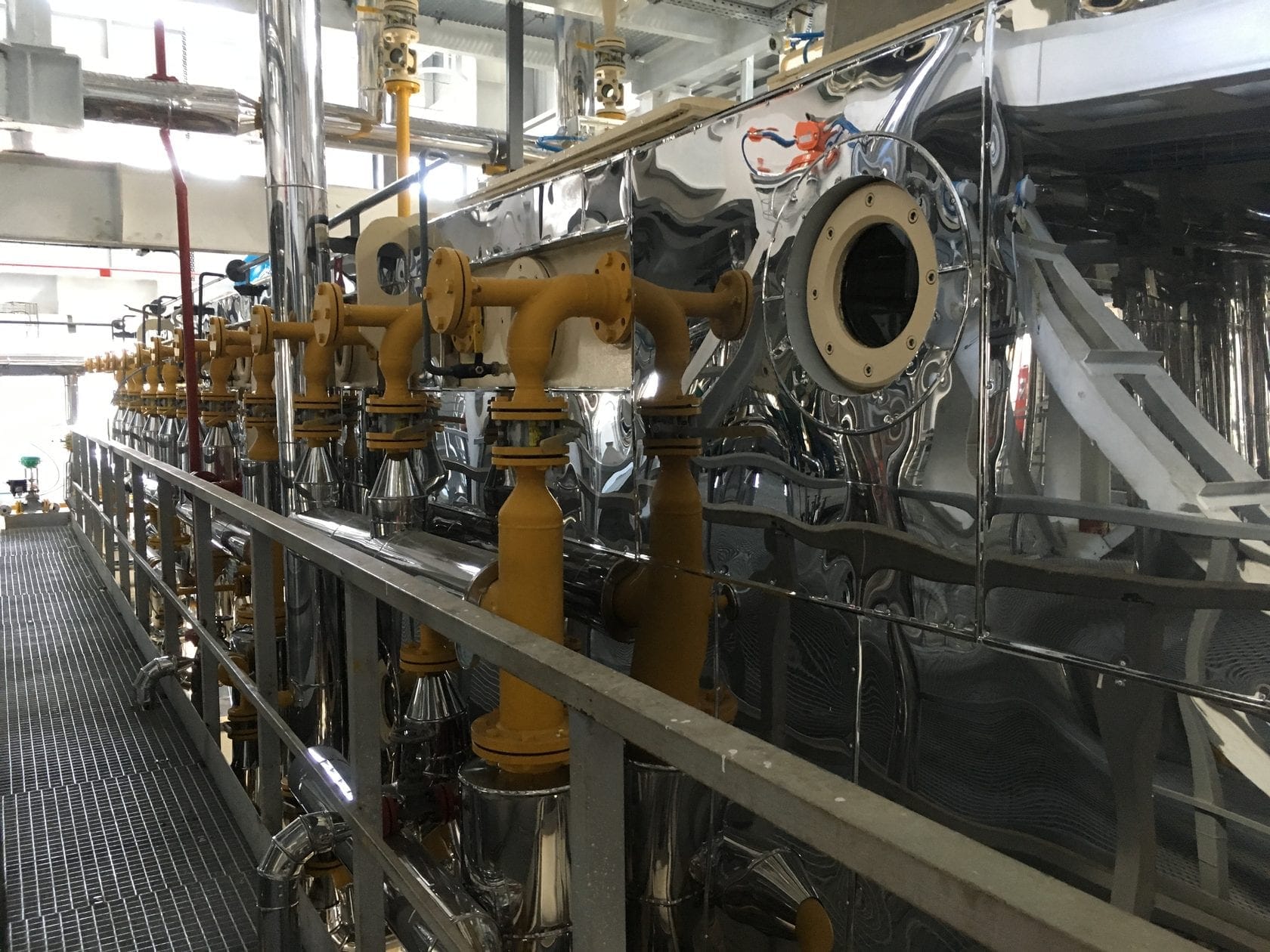
Optimization and Correct Process Control at the Oil-Extraction Stage
Extraction is the final and, at the same time, the most delicate stage of removing bound oil from pre-pressed cake or specially prepared flakes using an organic solvent, most commonly technical-grade hexane. How precisely the process is tuned in the extractor (loop-type or belt-type) directly determines a plant's key economic indicator — the residual oil content of the meal, which ideally should be below 0.8–1%.
Below is a practical guide to achieving stable operating conditions in the extraction section.
1. Raw-material preparation at the extractor inlet
The extractor does not forgive mistakes made upstream: the quality of the incoming material determines the hydrodynamics of the entire unit.
📏 Flake thickness must be stable, typically 0.25–0.35 mm. Flakes that are too thin stick together into a dense layer and block free solvent flow; flakes that are too thick prevent hexane from quickly penetrating the cells.
🌫️ Minimal fines ("flour"). Fine particles clog the conveyor's filtering screens, causing miscella to build up on the surface of the bed and causing a sharp drop in extractor throughput.
🌡️ Temperature and moisture of the mass. The material must enter cooled to around 45–55°C with controlled moisture — material that is too hot causes intense evaporation of light solvent fractions right at the inlet.
2. Controlling flows and miscella concentration
The extractor operates on a countercurrent principle, which requires tight balancing.
🔀 Concentration gradient. Clean solvent is fed to the last irrigation section, where the material is already nearly de-oiled. As it moves against the material flow, it gradually enriches with oil, turning into miscella of varying concentration, and by the first section it is washing the freshest portion of material.
⚖️ Solvent-to-material ratio must be held at a stable level — on average from 0.8:1 to 1.2:1 depending on the crop. Too much solvent overloads the distillation station and increases steam consumption; too little leads to under-extraction.
3. Controlling speed and bed height
The mechanical part of a loop or belt extractor requires precise control of the moving element's speed.
📐 Bed height on the mesh conveyor must be even across the full width, with no "pits" or mounds — otherwise the solvent will follow the path of least resistance, leaving the rest of the material untreated.
⏱️ Conveyor speed is adjusted based on the moisture, porosity and volume of incoming material. Too high a speed shortens solvent contact time and raises the residual oil left in the meal; excessive slowdown reduces the plant's daily throughput.
4. Miscella filtration
Before miscella goes to distillation (hexane evaporation), it passes through a system of screens and settling tanks within the extractor itself. Miscella always carries a certain amount of fine meal particles, so timely cleaning and purging of the drainage screens prevents sediment build-up in the sumps — which directly ensures uninterrupted operation of the miscella pumps.
Each of these four parameters affects the others — which is why tuning an extraction section is always done as a whole, not one indicator at a time.
Related equipment: EX-series loop extractor.