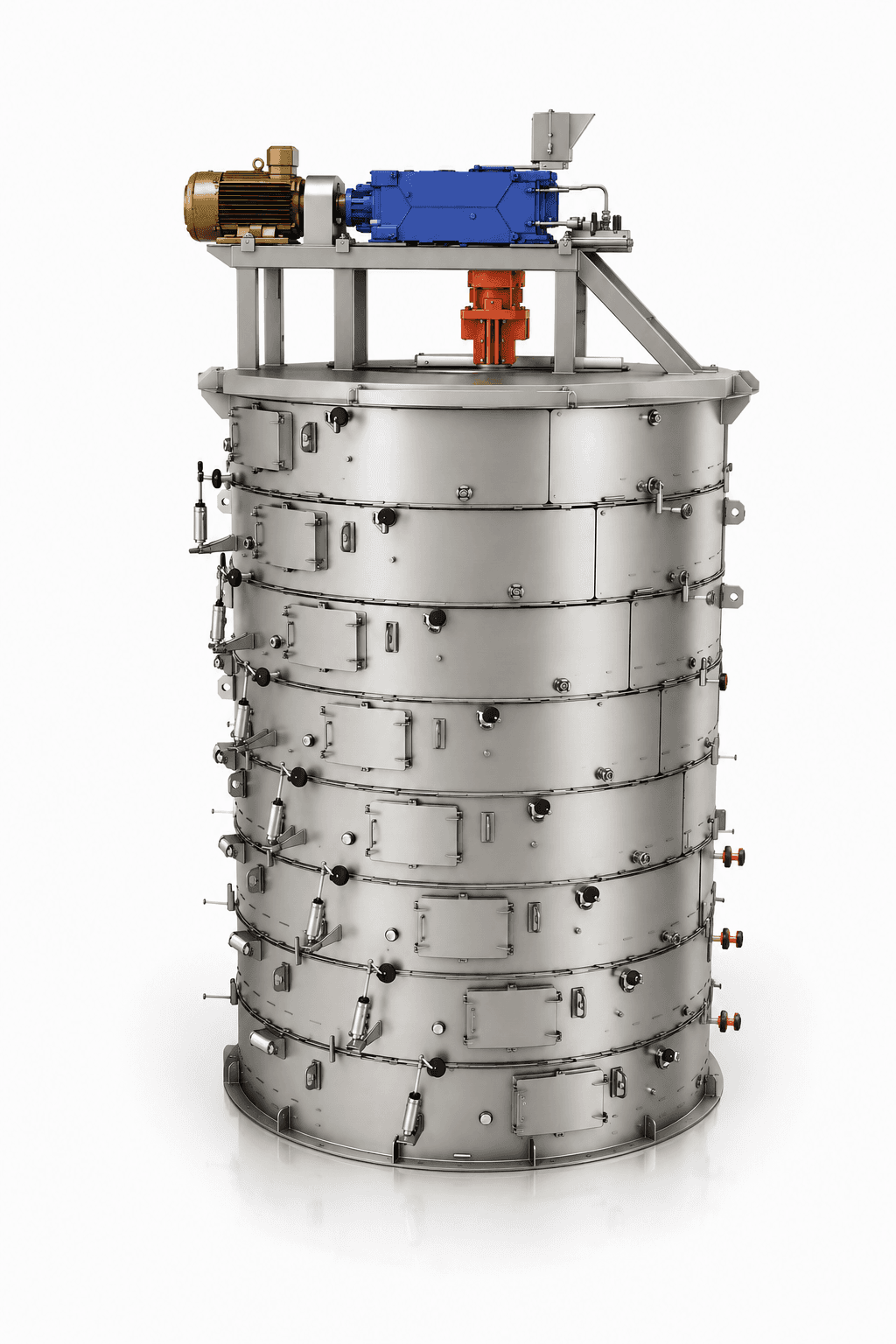
Roasters for the oil processing plant
Multi-chamber roasters for an oil processing plant
Our Equipment
Roasters for an oil mill: purpose
A roaster (seed conditioner) is the machine that prepares oilseeds such as sunflower, rapeseed and soybean with moist heat before pressing or extraction. The crushed raw material, called mash, is steamed, moistened and heated to the required condition, so oil is released more easily in the press and the oil yield stays stable. Oil yield and product quality depend directly on how the roaster works, which makes its selection one of the key steps in designing an oil mill.
How a multi-vat roaster works
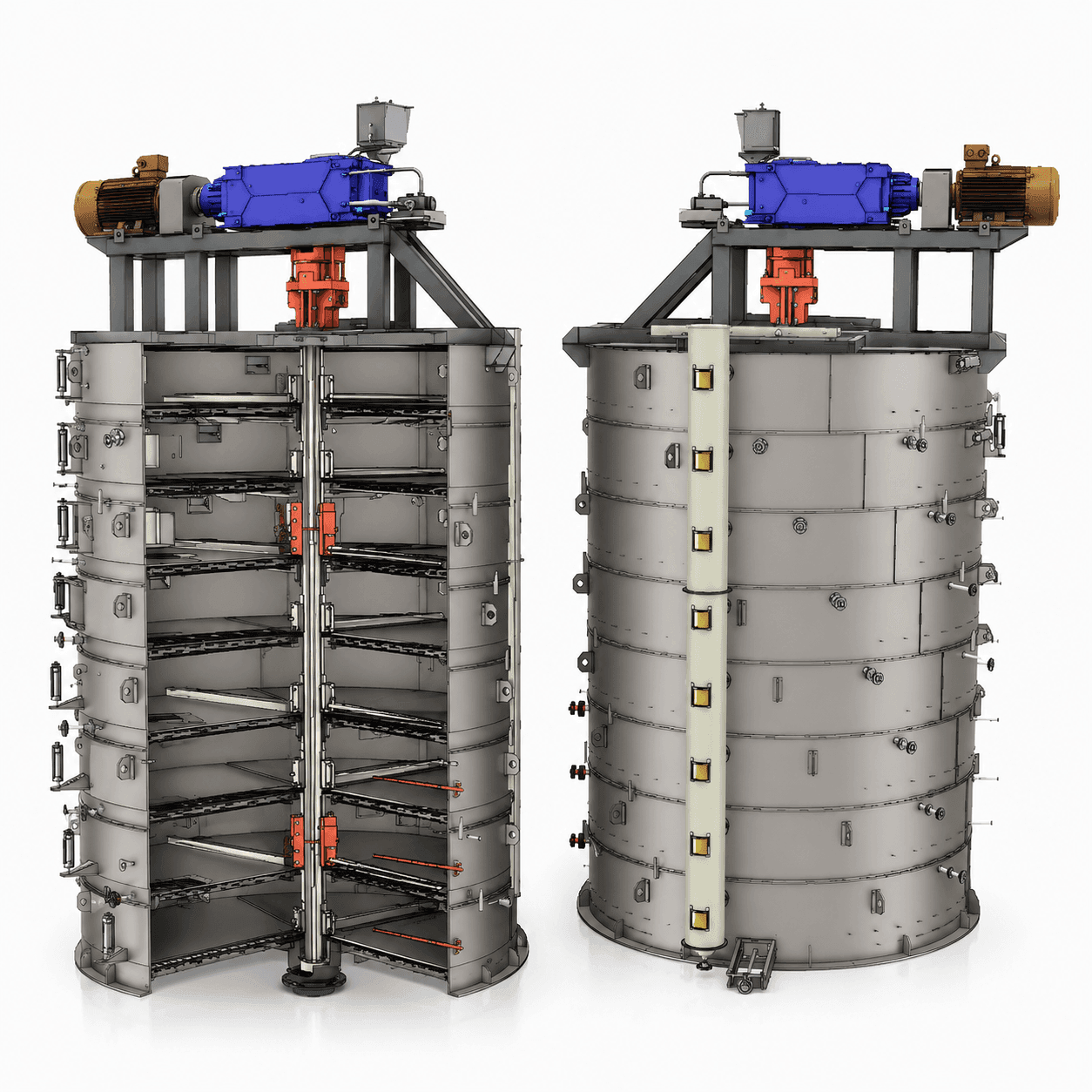
The multi-vat (vertical) roaster is the most common solution at oil extraction plants. It consists of several vats stacked one above another:
- Feeding. Crushed seed (mash) enters the top vat continuously.
- Mixing and transport. A central shaft with paddles mixes the mass, prevents overheating at the walls and moves the mash evenly down to the next vat.
- Heat transfer. The bottom, and often the walls, of every vat have steam jackets, so each tier keeps its own heating regime.
- Automatic control. The control system holds optimal process parameters and keeps the process continuous and stable.
How to choose a roaster
- Capacity. The RS range covers 25 to 1100 t/day. Choose a model with a margin over the actual plant capacity.
- Diameter and number of vats. Diameter ranges from 2000 to 5000 mm and the number of vats from 3 to 12. They define residence time of the mash and capacity.
- Heating area. From 9.3 to 204 m² depending on the model. Match it to the moisture and oil content of your raw material.
- Drive and weight. Drive power is 11 to 220 kW and weight without drive is 4.5 to 110.5 t. You need these figures for foundation and power supply design.
- Ceiling height. Column height is 1650 to 11,400 mm. A roaster is a vertical machine and the building has to accommodate it.
See the full parameter table on the page of RS series roasters and in the roasters brochure (PDF).
The roaster in the process line
The roaster sits before the press or the extractor. Depending on the processing scheme, seed from the roaster goes to an SP series screw press and the press cake goes to a loop extractor. The meal is then brought to its final condition by a DC series toaster. The operating principle and design are covered in the article "Roasters for oilseeds: operating principle and design".
Frequently asked questions about roasters
How does a roaster differ from a toaster?
The roaster prepares seed for pressing or extraction: it heats, mixes and, if needed, moistens it. The toaster works after the extractor: it finally removes the solvent from the meal, then dries and cools it.
How many vats do I need?
The number of vats sets how many separate treatment stages the material passes through and, together with diameter, affects capacity. The RS range has 3 to 12 vats; the exact number is selected for your raw material and plant capacity.
Which crops are the roasters suitable for?
Sunflower, rapeseed, soybean and other oilseeds. The operating regime is set for your raw material.
How do I order a roaster?
Send us the capacity, raw material and site conditions, and D.ENERGY engineers will select the model and configuration. Contact us.