News
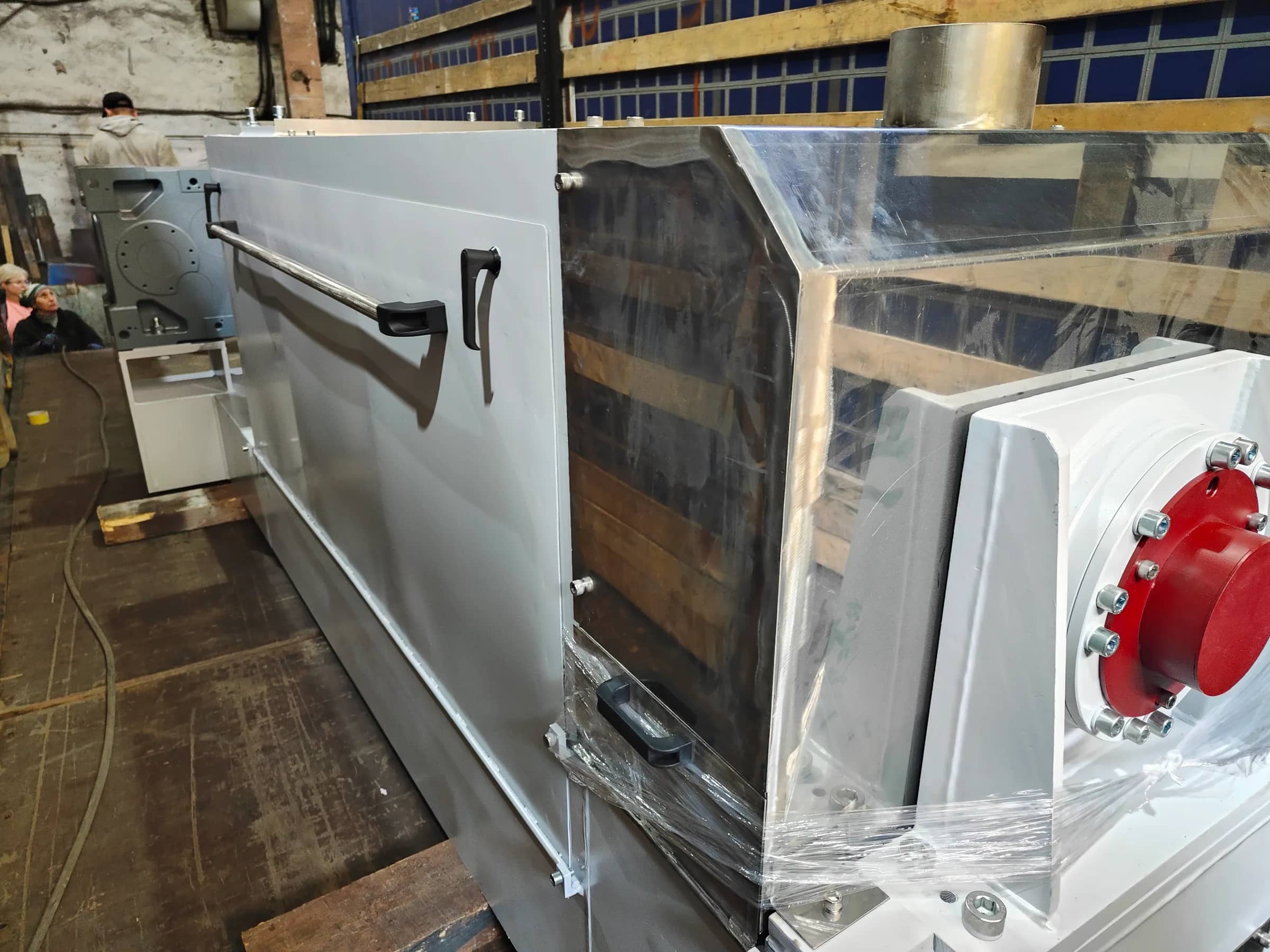
Shipment of the SP100 oil press to AGRO-MAX LLC
On October 26, 2026, D.ENERGY dispatched an SP100 industrial oil press to AGRO-MAX LLC. This equipment is designed for the primary pressing of sunflower seeds and serves as a crucial component in the oilseed processing workflow. The SP100 press combines high throughput, a powerful drive system, and a modern control system, ensuring efficient operation within an industrial production environment. Key technical specifications of the SP100 press: Capacity: 70–80 tons of sunflower seeds per day. Electric motor: 55 kW, 1500 rpm. Gearbox: NORD. Main shaft rotation speed: 27 rpm.
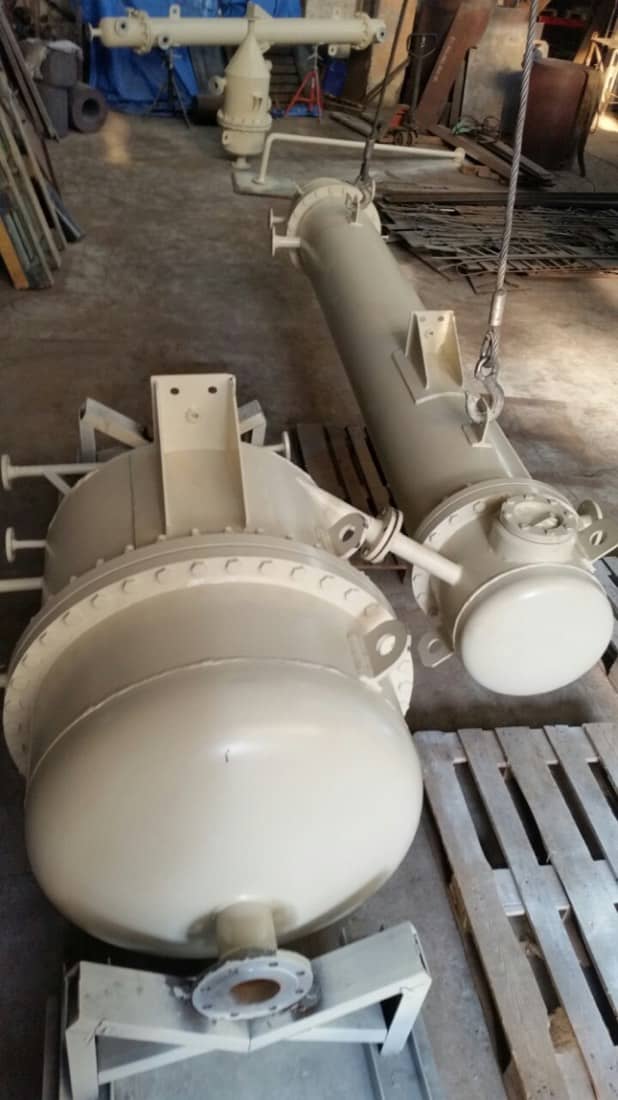
Heat Recovery and Hexane Trapping: Engineering Design of Shell-and-Tube Heat Exchangers by D.ENERGY
In extraction production, heat recovery and solvent vapor condensation directly shape processing costs. Ineffective condensation leads to excessive cooling water consumption, solvent vapor emissions to ventilation, or overloading of the absorption column. D.ENERGY engineering bureau designs and manufactures shell-and-tube heat exchangers and condensers for aggressive and explosion-hazardous environments of oil plants. Engineering standards for D.ENERGY heat exchange equipment: Thermo-hydraulic design: diameter, length and number of heat exchange tubes are calculated for actual customer heat carrier parameters (miscella, hexane vapors, cooling water, condensate).
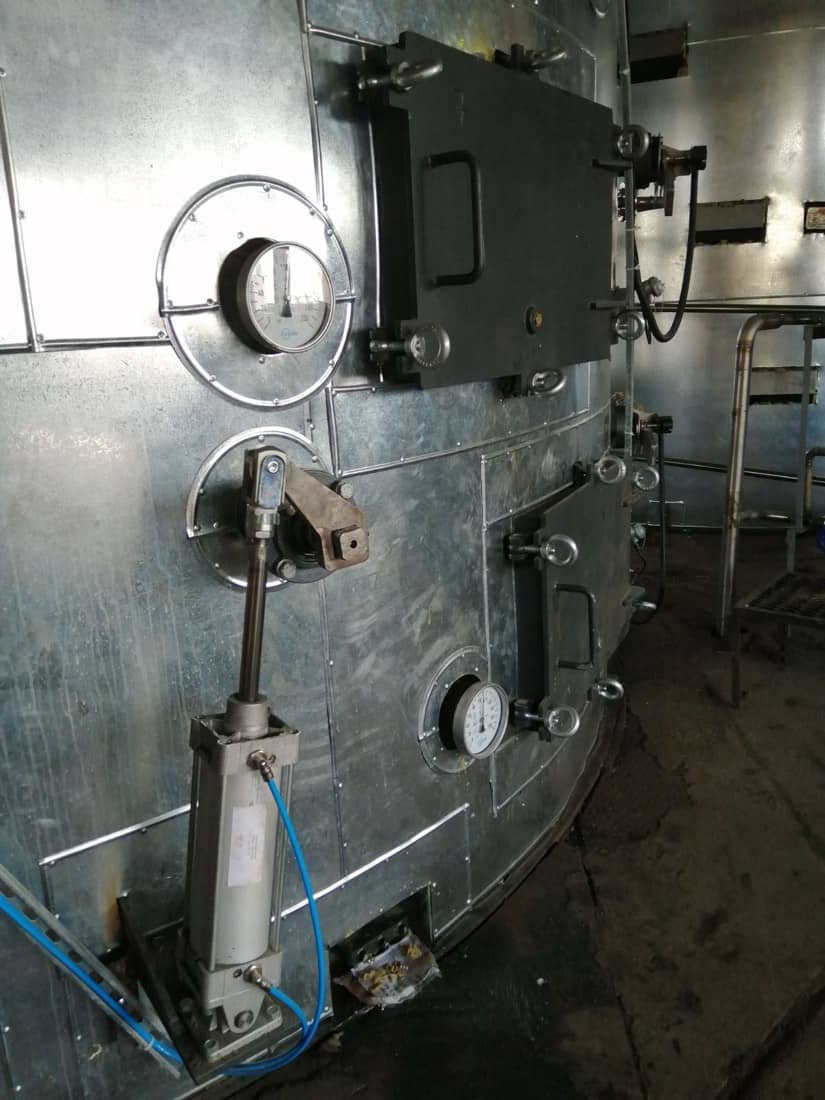
Safe Desolventization and Meal Conditioning: DC Series Toasters for Modern Oil Extraction Plants
After plant oil extraction with solvent (technical hexane), meal contains 25–35% volatile hydrocarbons. The key task of meal distillation and processing is complete solvent recovery with reduction of its residual concentration in the final product to a safe level (< 300 ppm) and preservation of feed protein. D.ENERGY designs and manufactures vertical desolventizer-toaster units of DC series with various capacities — from 200 to 2,000 tons of meal per day. Technological features of DC series design: Multi-stage steaming: alternation of blind and live steam in the lower toaster chambers ensures intensive hexane distillation without over-drying meal fibers.
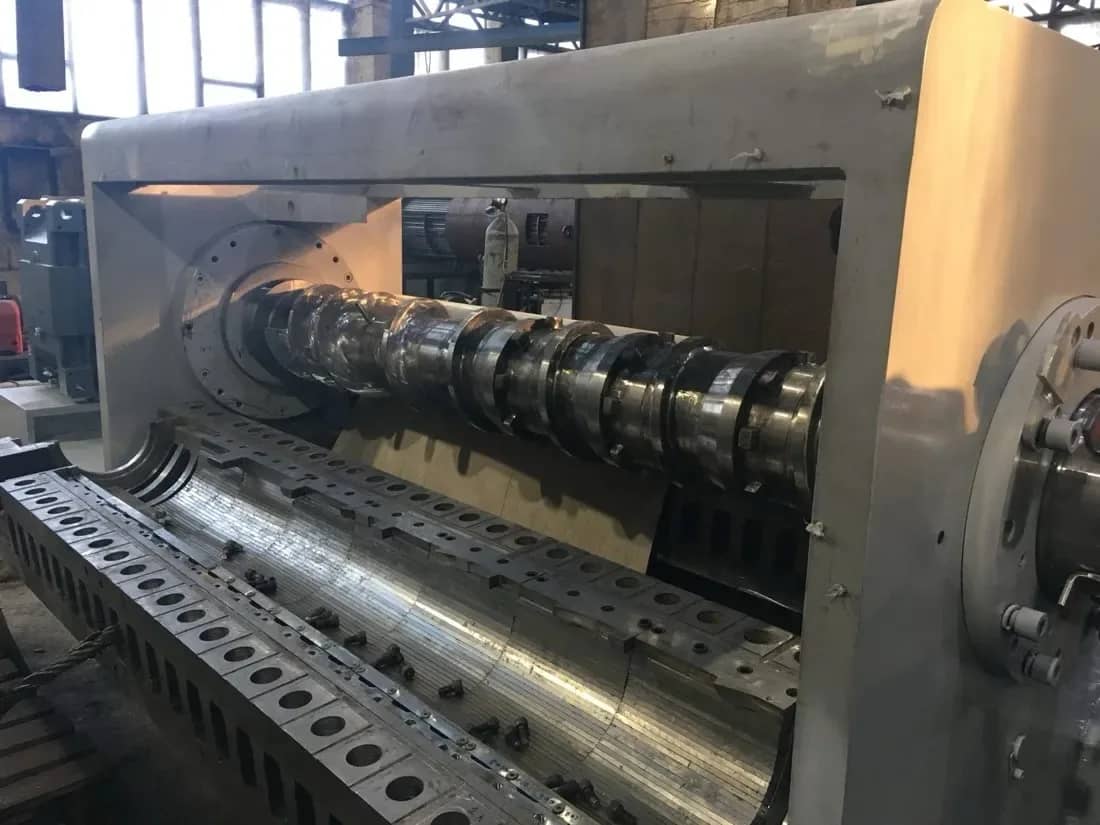
Wear Resistance of Oil Press Working Components: How Quality Strainer Bars and Screw Sets Reduce Oil Processing Costs
In the process of mechanical oil extraction from sunflower, rapeseed, or soy seeds, the working components of presses experience enormous abrasive and barometric loads. Wear of the strainer bar edge of just 0.3–0.5 mm leads to the widening of strainer slots, solid fraction (meal dust) carryover into the oil, chamber pressure drop, and a sharp increase in residual oil content of the meal cake. Machine-building enterprise D.ENERGY manufactures and supplies precision strainer bars and chambers for screw presses, as well as replacement screw sets and compression cones for most types of industrial oil-pressing units. Why D.ENERGY components withstand high loads: Allo
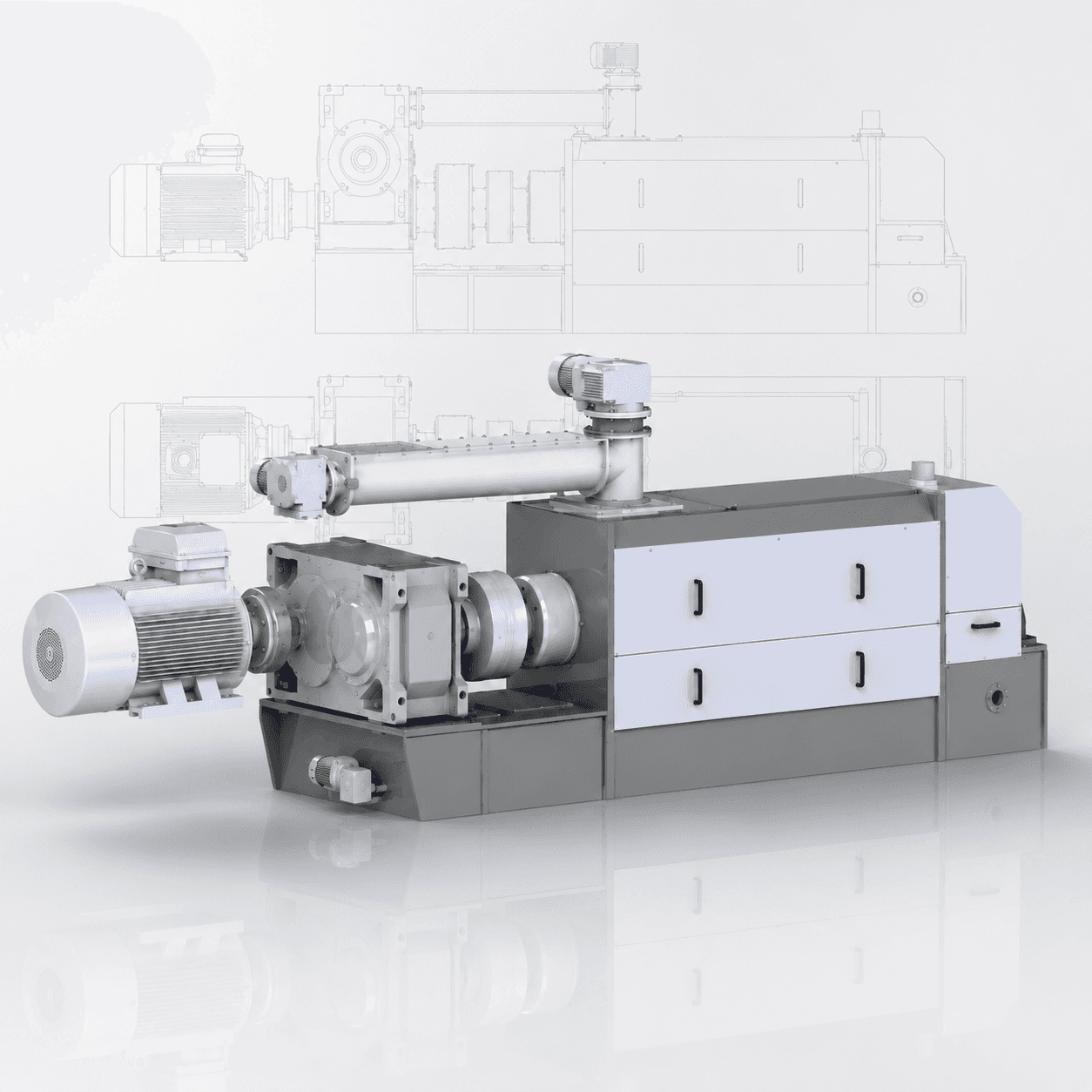
Why Oil Needs Filtration After Pressing
Oil coming straight out of a screw press (pre-press oil) is never a clean liquid. Along with it, the press carries fine cake particles, protein and mucilage impurities — collectively known as sediment, or foots. Before this oil can go to storage, further processing, or extraction, it has to be cleaned. What happens without filtration ⚙️ Accelerated equipment wear. Abrasive fine particles in unfiltered oil speed up wear on the seals and working surfaces of the pumps that move the oil further down the process chain. 🌡️ Fouled heat exchangers. Sediment settles on the tubes of shell-and-tube heat exchang
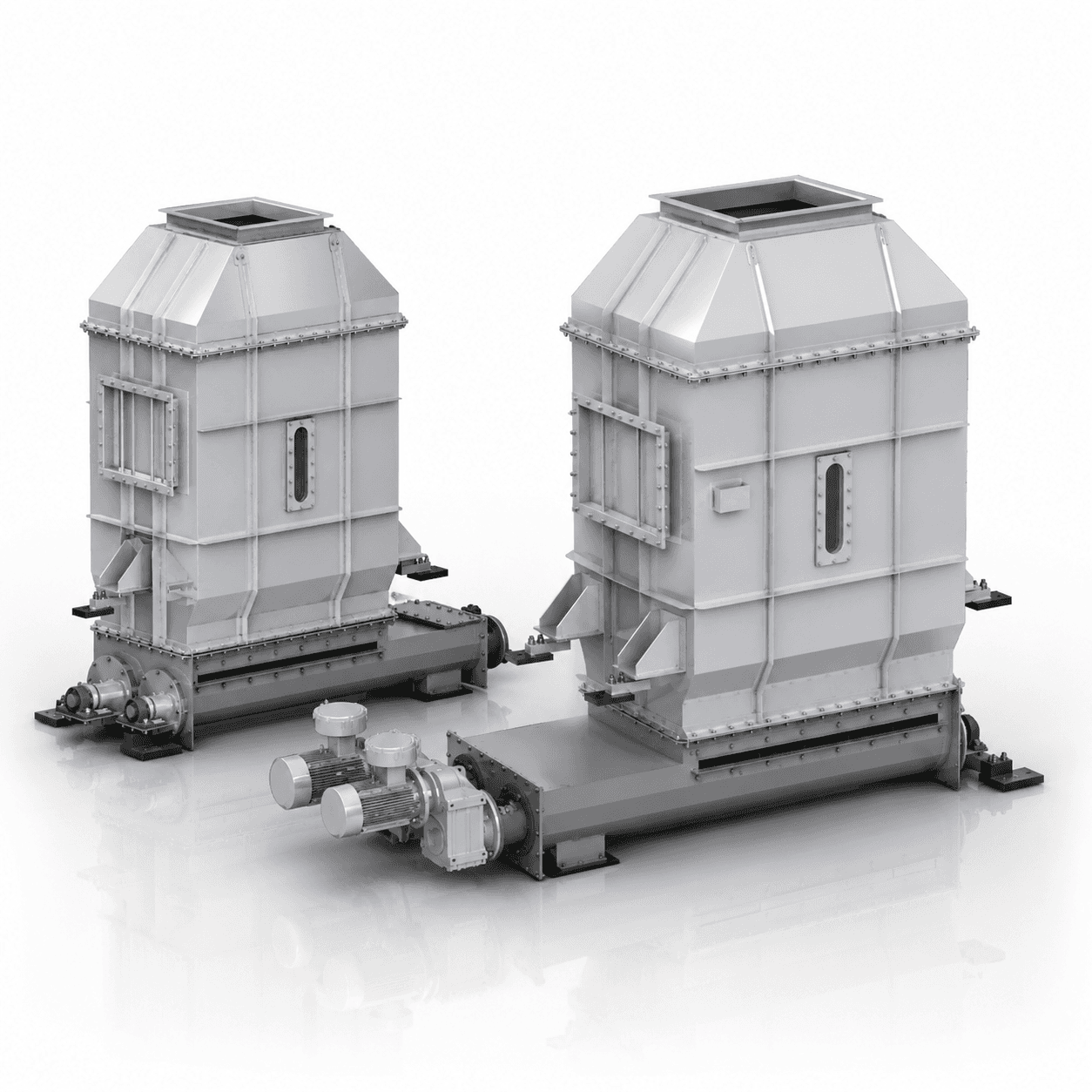
What Is a Crisper (Cooler) and Why It Matters at an Oil Mill
A crisper, or cooler, is the unit that completes the thermal treatment of press cake or extracted meal. After leaving the press or the toaster, the material is hot (around 100–105°C) — and before it can be safely sent to storage or shipped out, its temperature has to be brought down to a safe level. Why cake and meal need to be cooled 🔥 Spontaneous-combustion risk. Hot organic material stacked in bulk in a bin or warehouse can self-heat and, in the worst case, self-ignite. Cooling it to a safe temperature removes this risk already at the production stage. 💧 Storage stability. A sharp temperature diff
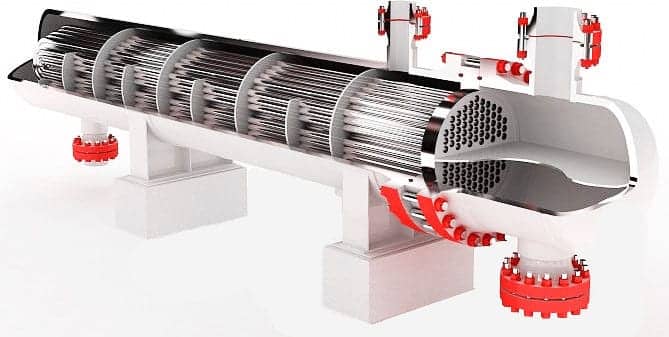
Shell-and-Tube Heat Exchanger: Design, Operating Principle and Uses in Oil & Fat Processing
The shell-and-tube heat exchanger is one of the most widely used types of heat-transfer equipment in industry, thanks to its simple design, reliability, and ability to handle high pressures and temperatures. In oil and fat processing, it is used at almost every stage where a process stream needs to be heated, cooled, or condensed. Design 🛢️ Shell — the cylindrical body of the unit, inside which one of the heat-transfer fluids moves (the shell side). 🧵 Tube bundle — a set of parallel tubes carrying the second fluid. 🔲 Tube sheets — fix the tube ends at both ends of the
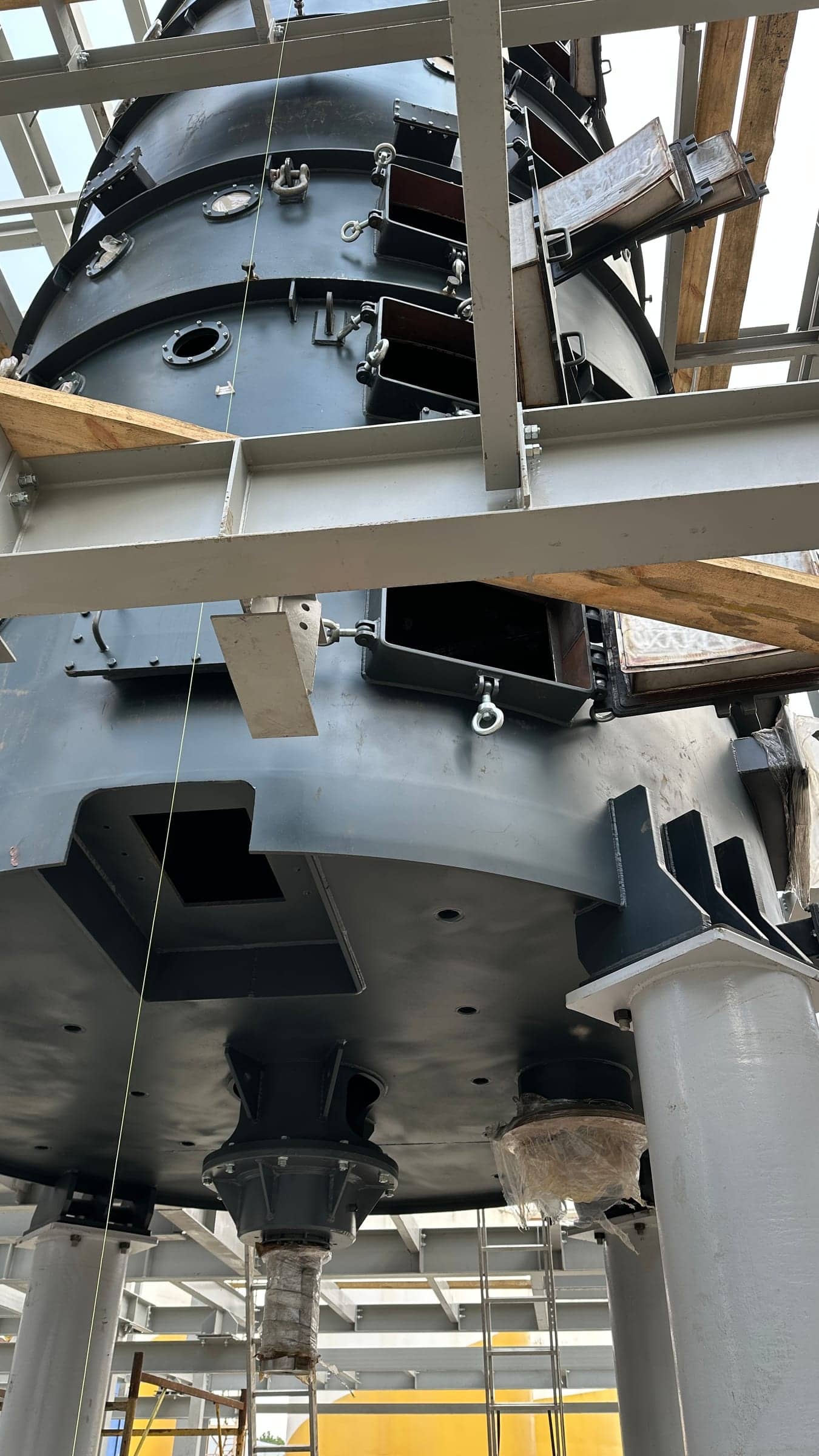
Roasters for Oilseed Processing: Operating Principle and Design
A roaster is a key process unit in an oilseed-processing line (sunflower, rapeseed, soybean, etc.). It performs the moisture-heat treatment of crushed seed (meal/flakes) before pressing or extraction. The oil yield and the quality of the finished product depend directly on how well this unit performs. How a multi-tray roaster works A multi-tray (vertical) roaster is the most common solution at oil-extraction plants. It consists of several trays (decks) stacked one above another, each performing its own stage of conditioning. 📥 Feed. Crushed seed flakes enter the top tray of the unit continuously. 🔄 Mix
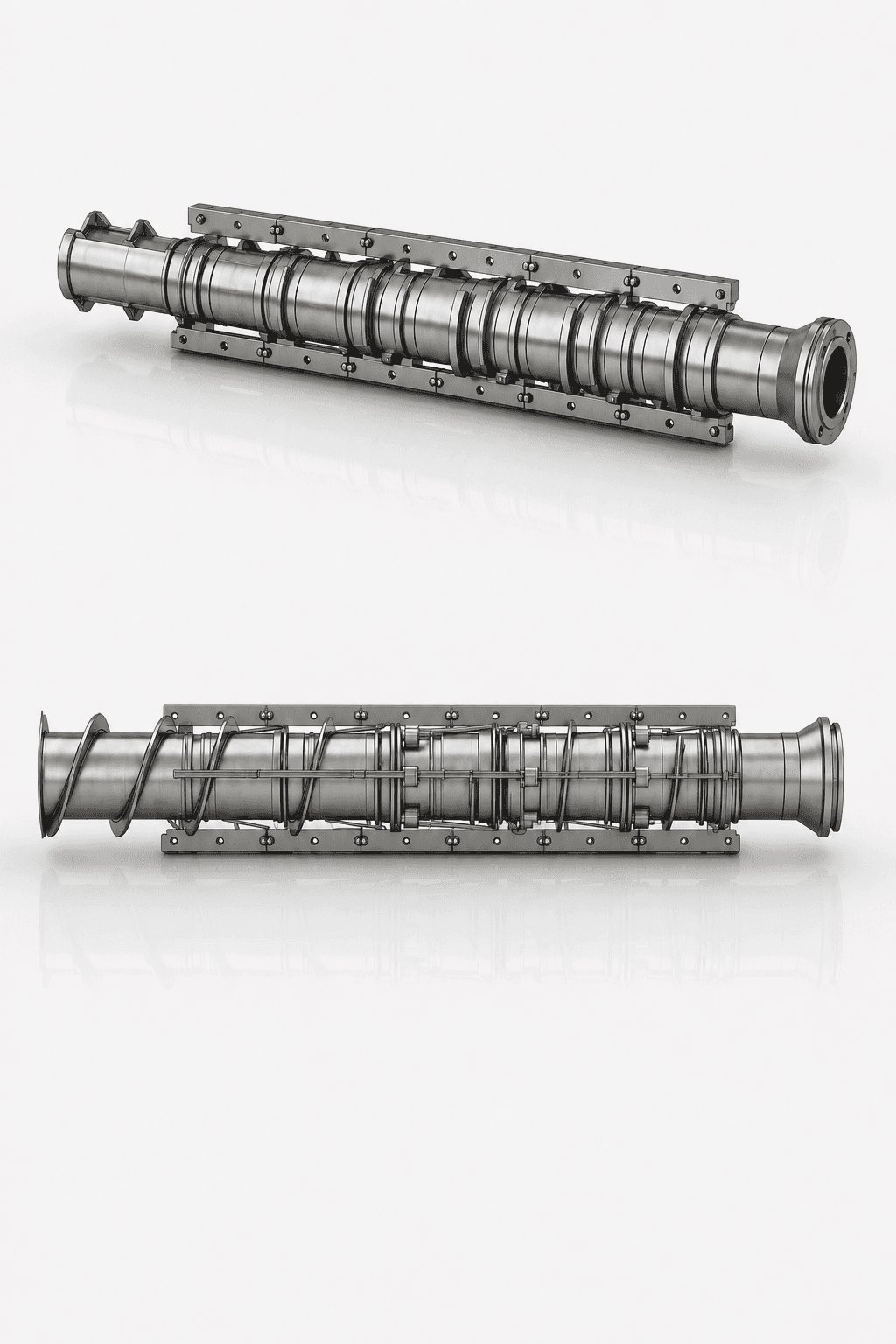
Why D.ENERGY Cage Bars Pay Off: Hardfaced Working Surface vs. Standard Steel
Cage bars are the components of a screw press cage that come into direct contact with the material being pressed. This is one of the most heavily loaded parts of the press: abrasive contact with seed and cake gradually wears down the working surface, and sooner or later the bar has to be replaced. The problem with standard bars A standard cage bar is made from a single, uniform grade of steel. The whole part is equally soft and equally hard — both the working surface that takes the abrasive wear and the body of the bar that simply holds the structure together. Once the working surface wears out, the entire bar has to be replaced, even though the rest of the
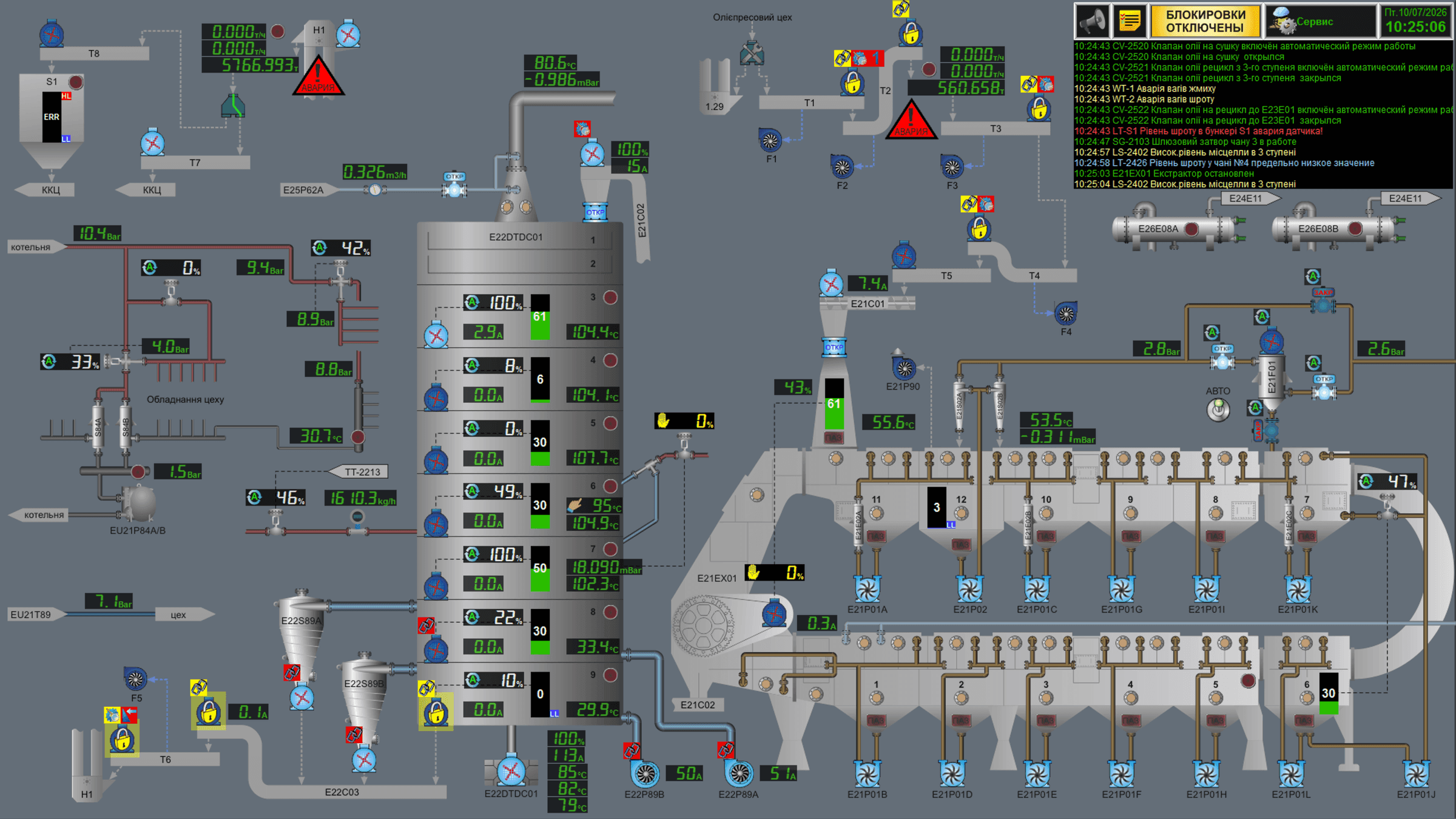
HMI and SCADA Development: What It Looks Like in Practice
The terms HMI and SCADA are often used as synonyms, although they are different levels of the same system. HMI (Human-Machine Interface) is a local operator panel next to a specific unit: it shows the state of that particular machine and lets the operator control it. SCADA is the level above it: a system that gathers data from every HMI/PLC on the line into a single dispatch view, stores parameter history, and generates plant-wide alarm notifications. What development looks like in practice — project stages 🔍 Technical survey of the line. First we record what equipment the customer already has, which sensors and actuators exist on e
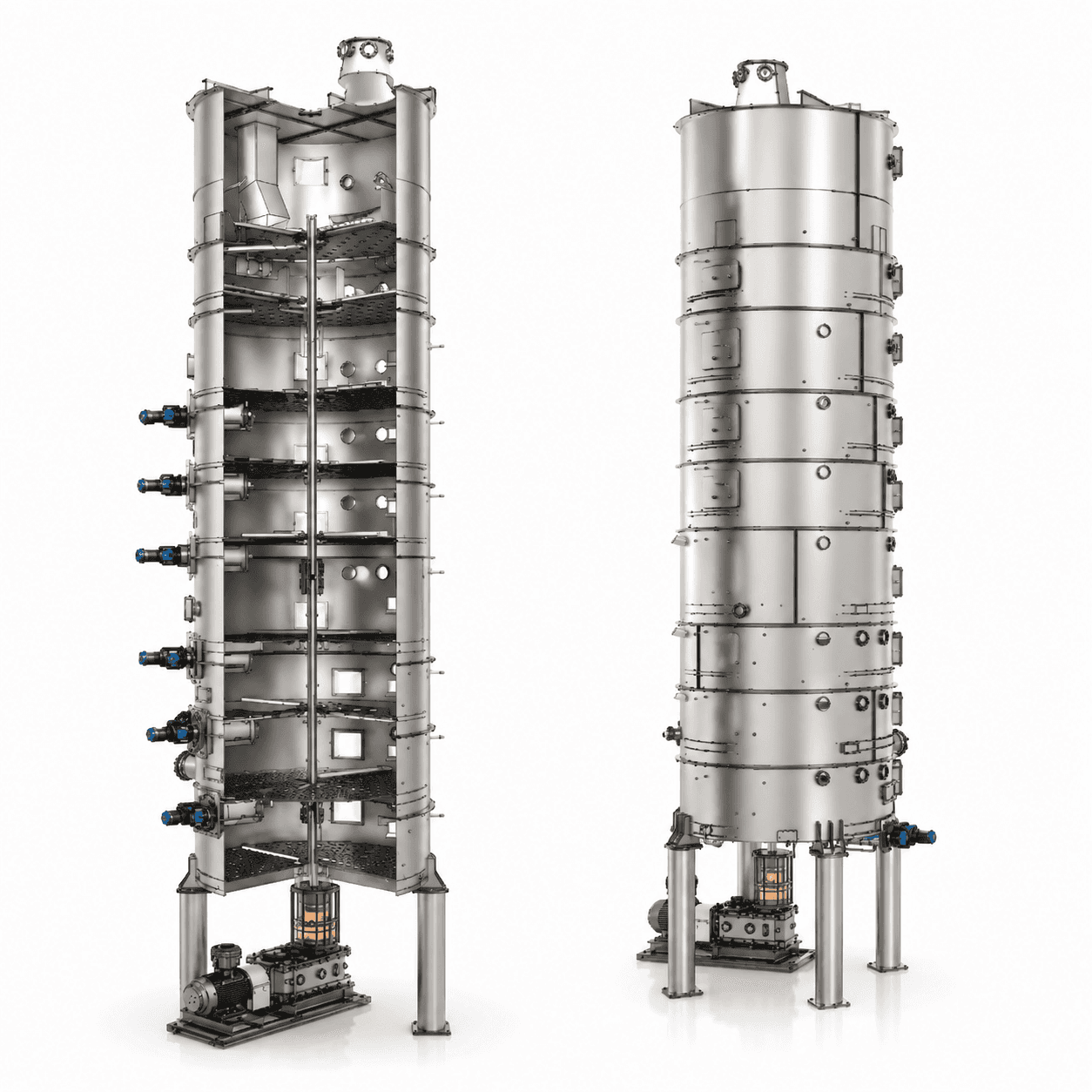
Toasters in Extraction Plants: Types, and Why the DC Series Is a Multi-Tray Design
After the loop extractor, the meal comes out wet and saturated with hexane vapor — it cannot go straight to storage or feed. The unit that brings the meal to its finished state is called a toaster (desolventizer-toaster). This is where the solvent is finally removed from the material, and the meal itself is dried and cooled. Toaster designs used in the industry 🏗️ Multi-tray (multi-deck) toasters — the meal passes sequentially through several trays (decks) stacked one above another, falling from the upper tray to the one below. Each tray maintains its own heating regime. 🥁 Rotary (drum) toasters — a
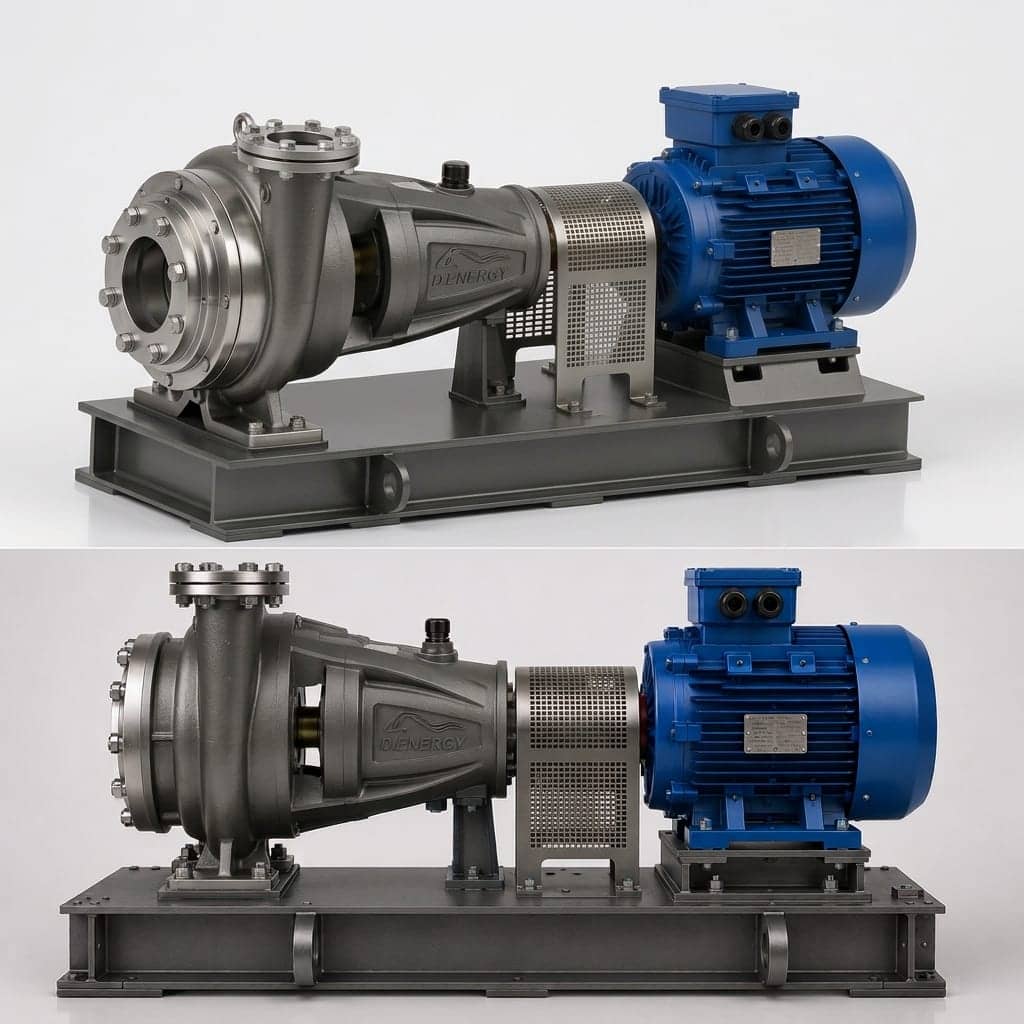
Miscella Pumps: Why an Ordinary Pump Will Not Work Here
Miscella is a mixture of oil and hexane leaving the extractor on its way to distillation. On the surface it is just a liquid that needs to be pumped from point A to point B. But by its nature it is an explosive-hazard fluid, and a pump handling it has to meet requirements far beyond an ordinary industrial pump. Why a standard pump will not do ⚡ A spark means an explosion. An ordinary motor or a standard contactor can spark during switching. That is unacceptable in hexane vapor, so the motor, terminal box and every electrical component of the pump are built in an explosion-proof design. 💧 Shaft-seal leakage.